The Lok Sabha is also known as the Lower House of the Indian Parliament. It presently consists of 543 Member of Parliament (MP) seats. The members of this House are elected by the adult citizens of India and serve for five years. Along with the Rajya Sabha (Upper House), which has 245 members, the Lok Sabha forms India's Parliament. It creates laws and represents the people of India at the national level.
Presently, there are a total of 4,123 MLA seats in India across all 28 states and 8 union territories. Here's a breakdown:
States: Each State has its own Legislative Assembly with varying members' capacity. The largest State, Uttar Pradesh, has 403 MLAs, while the smallest, Sikkim, has 32.
Union Territories (UT): Only 3 out of the 8 Union Territories have legislatures. The Delhi Legislative Assembly has 70 members, the Puducherry Legislative Assembly has 33 members (3 nominated by the central government), and the Jammu and Kashmir Legislative Assembly has 114 (elections haven't been held yet).
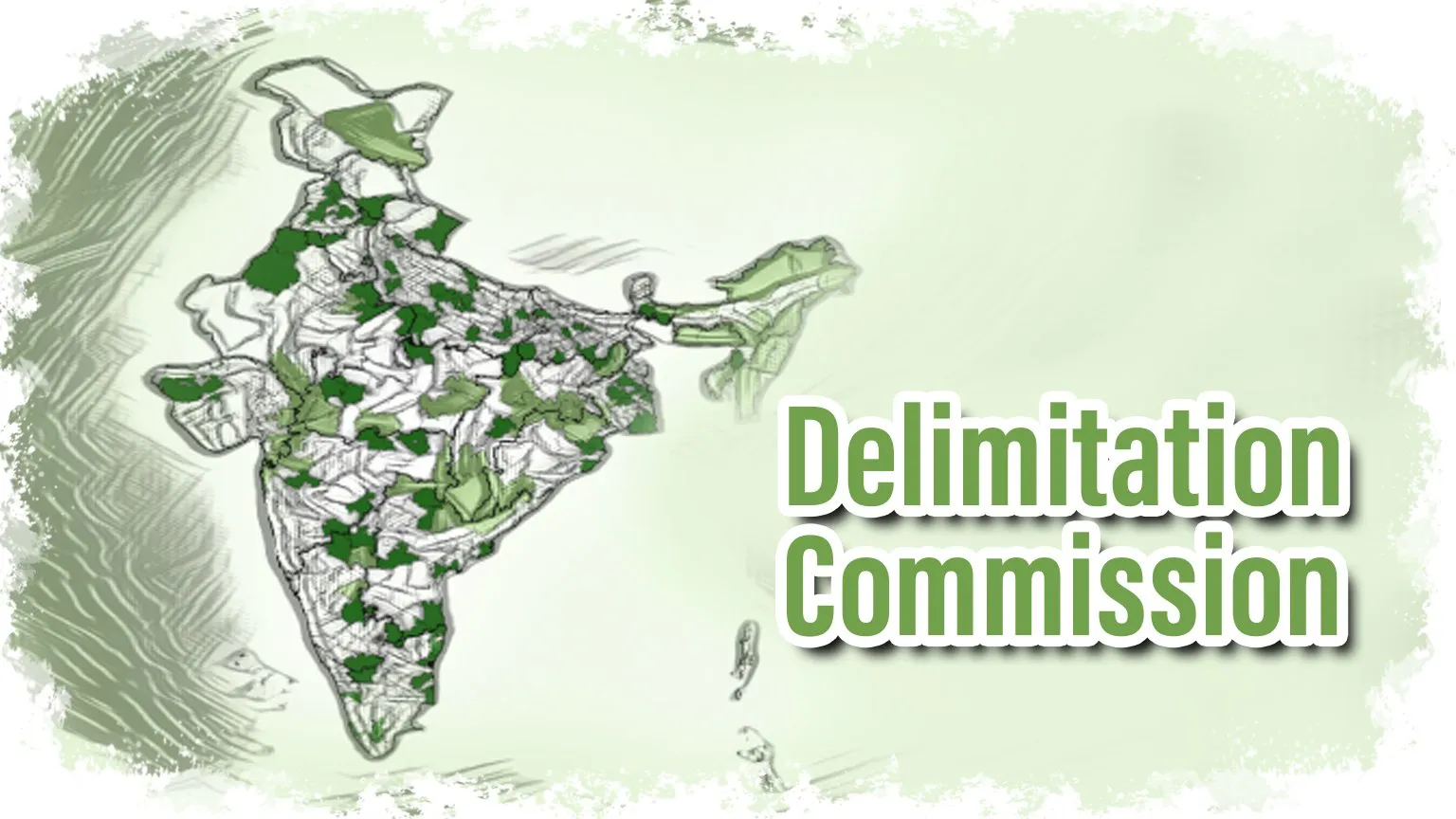
The Indian government is getting ready to carry out a country-wide Delimitation exercise. This exercise involves defining the boundaries of constituencies for the Lok Sabha and State Legislative Assemblies. The exercise is likely to happen in 2026 after the Census.
Delimitation means fixing the number of seats and boundaries of territorial constituencies in each State for the Lok Sabha and Legislative assemblies. It also includes determining the seats to be reserved for Scheduled Castes (SC) and Scheduled Tribes (ST) in these houses.
Articles 82 and 170 of the Constitution provide that the number of seats in the Lok Sabha and State Legislative assemblies and its division into territorial constituencies shall be readjusted after the Census. This 'delimitation process' is performed by the 'Delimitation Commission' that is set up under an act of Parliament. Such an exercise was carried out after the 1951, 1961, and 1971 Census.
Delimitation has been frozen as per the 1971 Census to promote population control measures so that States with higher population growth do not end up having higher seats. It was done through the 42nd Amendment Act till the year 2000 and was extended by the 84th Amendment Act till 2026.
Hence, the population based on the number of seats allocated refers to the population as per the 1971 Census. This number will be readjusted based on the first Census after the 2026 Delimitation exercise.
IntelliSense Solutions focused on developing Political strategies & advisory services by means of realtime data collection & analytics thereof from the research, surveys, socialmedia, electronic media etc, we are determined to do good for India by transforming the politics into good Governance.